Liver and kidneys are the main parts of human body. The function of liver and kidneys which are as discussed below –
Liver
The liver is found only in the vertebrates. Newly absorbed food materials pass through the liver before being transported to the other parts of the body. The liver is largest internal organ of our body.
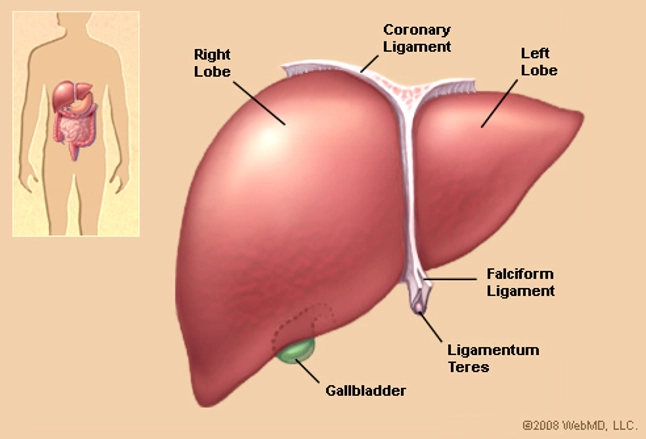
It is located mainly upper right portion of our abdomen and beneath the diaphragm to the right of the stomach. Adult liver weighs 1.5 kg. It consists of four lobes and receives about 1.5 quarts of blood every minute via hepatic artery and portal vein.
Function of Liver – The blood comes imto the liver from digestive track. The function of the liver is to filter the blood before further passing it to the rest of human body. The liver stores carbohydrate as glycogen, minerals, salts, lipids, vitamin A, B12, and D. The liver helps to keep blood sugar (glucose) level constant. The liver makes a wide variety of products including most of the plasma proteins and bile. Bile is stored in the gall bladder and passed into duodenum to help digestion. The liver converts toxins into harmless substances. About 100 chemicals reactions constantly go into the liver. This produces a significant amount of heat, which contributes to the maintenance constant body temperature. Liver is the only human organ, which can regenerate itself.
Thus, in simple words, the main functions of the liver are
- Blood purification
- Carbohydrate, fat, and protein metabolism.
- Bile production
- Regulate blood clotting and resists infection.
- Removal of ammonia from the body.
- Remove drugs and other poisonous substances from the blood.
Due to several functions, liver is suspectible to quick damage also.
Kidneys – Kidneys are paired been shaped organs about five inches long in human. The two kidneys are situated in the abdominal cavity, one on either side of vertebral column. The concave portion lies nearest the backbone and is deeply cleft by the hilus through which arteries, nerves, lymphaties, and veins enter the kidney sinus.
Function of Kidney – The functional units of kidneys are called Neophrons. There are around one lakh nephrons in each kidney. Each neuphron has Bowman’s capsule at one end. Urine formation begins in Bowman’s capsule. Kidneys filter extra water and toxins from the blood through neuphrons. The kidneys filter around 113 to 144 liters of blood per day.
The main functions of kidney are
- Regulation of pH
- Excretion of wastes and toxins.
- These hormones help to regulate blood pressure, make red blood cells, and promote bone health.
- Ensures an adequate quantity of plasma to keep blood flowing to vital organs.


Good article👍
LikeLiked by 3 people
Thanks for appreciation and reading my post 😊
LikeLike
This is really informative
Check out my wildlife blog and don’t forget to show some love…
LikeLiked by 1 person
Thanks for appreciation and reading my post 😊
LikeLike