Ramadan – It is also known as Ramazan and is the ninth month of the Hijri or Islamic calendar, considered the most sacred and pious month for Muslims worldwide. Muslims observe fasting (Roza) from early morning to evening during the sacred month of Ramadan worldwide. Fasting (Roza) means nothing to eat and drink and avoiding wrongdoing or sins or bad habits, even talking back, and is Farz (compulsory) for all adult Muslim individuals. The meal or food taken in the early morning or before Fajr Azaan is known as Sehri, and the evening breaking fast is called Iftar at Maghrib Azaan. Muslims believe that the Holy Quran was first revealed or introduced to Prophet Mohammad during the holy month of Ramadan.
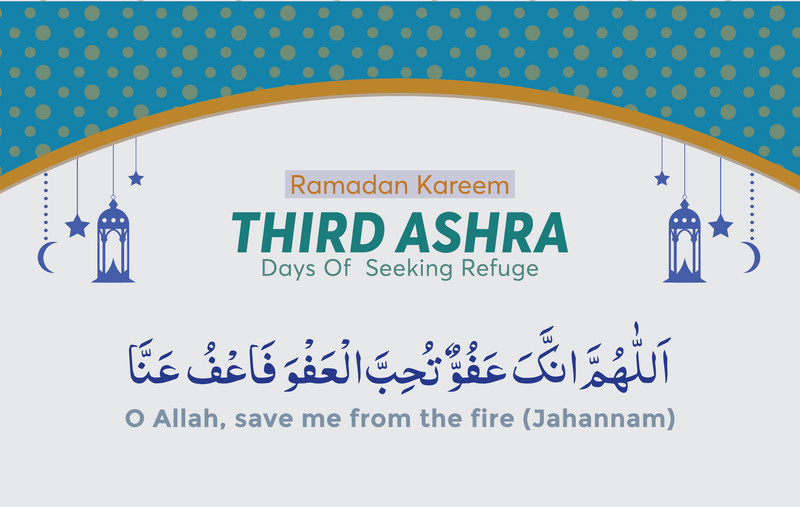
What is Third or Last Ashra of Ramadan – The last or third Ashra of Ramazan is Nijat (free from hellfire), which will start on the 21st day of Ramadan and end on the 29th or 30th day of Ramadan. The third or last Ashra is a very important stage (Ashra) of Ramazan, which provides an opportunity for Muslims to regret their sins or mistakes during the blessed month of Ramadan. Last Jumma (Friday) or Alvida Jumma and Layla Tul Qadr or Shab-e-Qadr also occur during the third Ashra of Ramadan. Thus, it is a very important Ashra for Muslims during the sacred month of Ramadan.
Layla Tul-Qadr, called as Shab-e-Qadr, is a highly revered night in Islam and is believed to be the holiest night when the Quran was first revealed or introduced to Prophet Muhammad, which is considered one of the holiest nights of the year during the third Ashra of Ramadan. It is also believed that the rewards for good deeds performed on these holiest odd nights are greater than those performed on any other night of the year. The holiest night in the third stage (Ashra) of Ramazan is known as ‘’Layla Tul Qadr’’ or ‘’Shab-e-Qadr’’. It is believed that Layla-Tul-Qadr or Shab-e-Qadr is regarded as a better or holiest night than nights of thousands of months. Muslims believe that Shab-e-Qadr or Layla Tul Qadr night, which may occur on the odd nights of this Ashra, such as 21st, 23rd, 27th or 29th of Ramadan.
Muslim individuals offer to pray (Namaz) the whole night on the odd nights of Shab-e-Qadr to seek protection (Nijat) from Hellfire during the third stage (Ashra) of Ramadan. The Last Ashra also allows to all Muslims to offer special prayer (namaz) to seek blessings and forgiveness from God (Allah), which saves them from hellfire. Muslims are also blessed with a night (Shab-e-Qadr), which is better than thousands of months or nights in the Islamic Calendar. Alvida, the last or final Friday of Ramzan is also celebrated in the third or last Ashra of Ramadan.
 daneelyunus