Introduction – A.P.J. Kalam was born and raised on October 15, 1931, in Rameswaram, Tamil Nadu. The father of Abdul Kalam was Jainulabdeen Marakayar who was an imam of a local mosque and a boat owner and his mother Ashiamma was a housewife. He was the youngest of one sister and four brothers in this family.
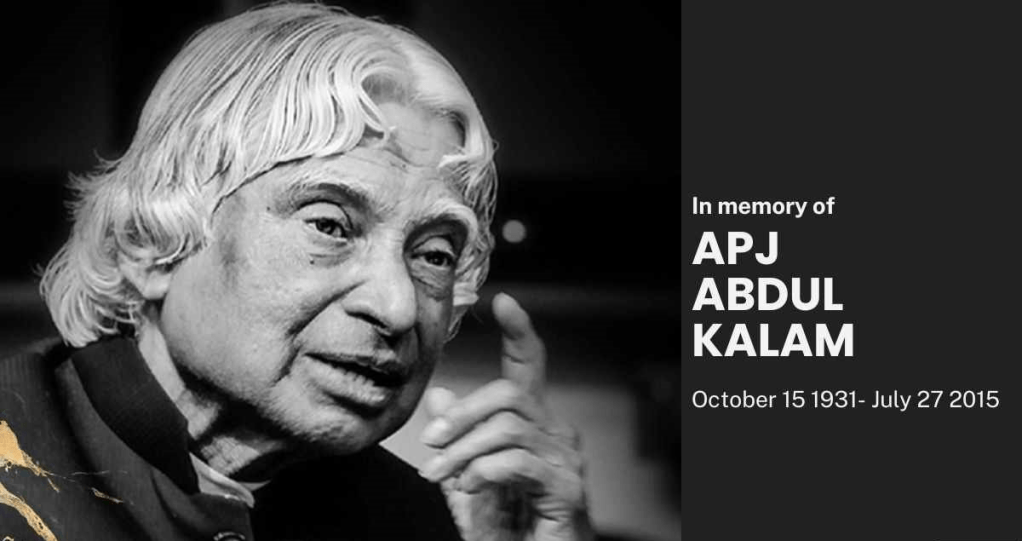
Abdul Kalam was an Indian scientist who spent time as a scientist and science administrator for four decades mostly at the Indian Space Research Organization (ISRO) and Defense Research and Development Organization (DRDO). He was involved in military missile development efforts and India’s civilian space program. Thus, Abdul Kalam was also known for the Missile Man of India for his great work on the development of ballistic missiles and introduced vehicle technology. He also popular for his motivational writing and inspiring lectures, especially for the students and youth.
Abdul Kalam also played an important role in India’s Pokhran-II nuclear tests in the year 1998 under the Government of Atal Bihar Bajpayee. He also served as the President of India between 2002 and 2007. He was also received several awards including India’s highest civilian honor in the year 1997.
Personal life – A.P.J. Kalam was born and raised on October 15, 1931, in Rameswaram, Tamil Nadu. The father of Abdul Kalam was Jainulabdeen Marakayar who was an imam of a local mosque and a boat owner and his mother Ashiamma was a housewife. He was the youngest of one sister, Asim Zohra, and three brothers Kasim Mohammad, Mohammad Muthu, and Mustafa Kalam. Abdul Kalam was very close and supportive to his elder brothers, a sister, and their families throughout his life.
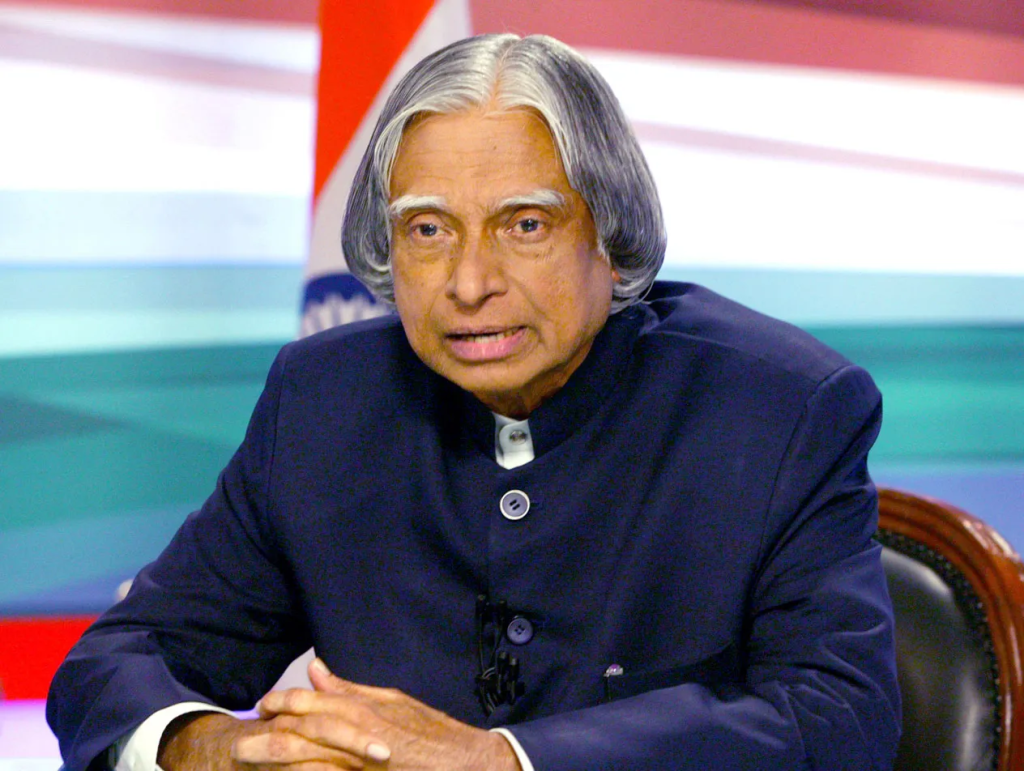
Career – Abdul Kalam worked as a scientist in the Aeronautical Development Establishment of the Defense Research and Development Organization after graduating from the Madras Institute of Technology in the year 1960. He was also a member of the Defense Research & Development Service (DRDS). Abdul Kalam started his career by designing a small hovercraft and also joined the INCOSPAR and worked under the renowned space scientist, Vikram Sarabhai. He was transferred to the ISRO (Indian Space Research Organization) in the year 1969 and worked as the project director of India’s first Satellite Launch Vehicle (SLV-III) that was successfully deployed the Rohini satellite close to earth orbit in July 1980.
Awards – Abdul Kalam was awarded and honored with the Padma Bhushan in the year 1981 and the Padma Vibhushan in the year 1990 by the Government of India for his great work with DRDO and ISRO. He also worked as a scientific advisor to the Government of India. He received the Bharat Ratna, the highest civilian honor in the year 1997 for his great work on the scientific modernization and research of defense technology in India. Abdul Kalam also received the Von Braun Award from the National Space Society in the year 2013.
There are several scientific and educational institutions were renamed or named to honor Abdul Kalam such as Kerala Technological University was renamed as A.P.J. Abdul Kalam Technological University in Thiruvananthapuram, Uttar Pradesh Technical University (UPTU) was renamed as A.P.J. Abdul Kalam Technical University, Kalam Institute of Health Technology in Visakhapatnam, and many more.
Death – Abdul Kalam died at the age of 83 due to sudden cardiac arrest at 7:45 pm on July 27, 2015 while delivering a lecture at the Indian Institute of Management, Shillong. The birthday of Abdul Kalam was celebrated as World Students Day on October 15 across the world.
 daneelyunus
Wonderful post
LikeLiked by 1 person
Thank you
LikeLike