Introduction – World Octopus Day is celebrated every year on October 8 across the world to spread awareness about the importance of octopuses in the ecosystem. The main aim of this international day is to raise awareness about these amazing creatures across the world and motivate people for learning more about them. Octopuses are curious features and are also known for their eight arms and their intelligence. They are predators and use their arms for catching prey. Octopuses also use their arms for helping them move around in the water. They are very important members of the ocean ecosystem and also provide food for other animals such as whales and sharks. Octopuses are available in several sizes and colors and are found in all oceans all around the world.
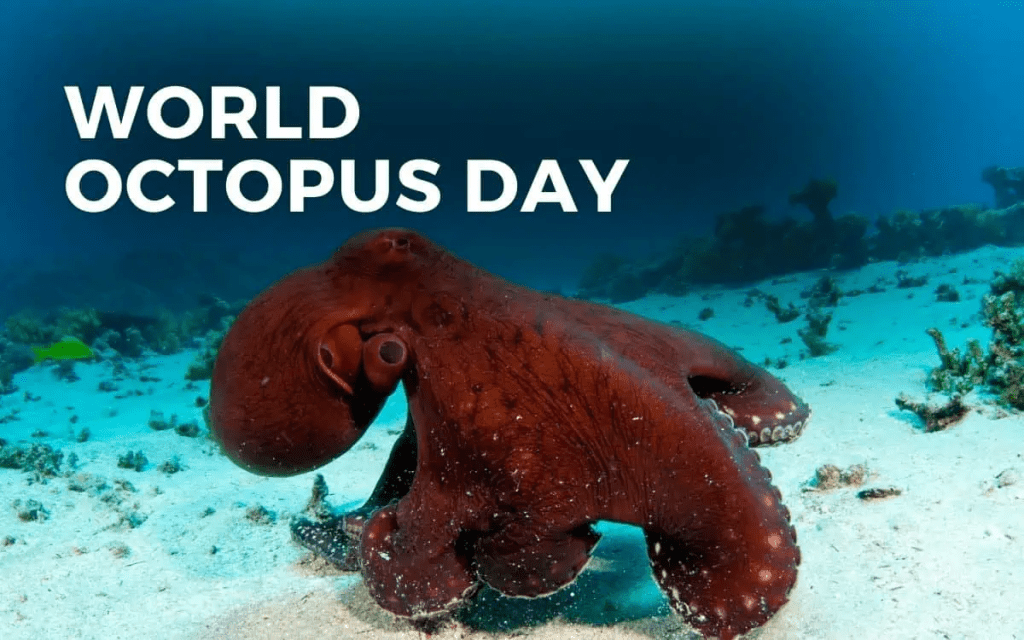
Octopuses are a very important part of the marine ecosystem and help to keep the ocean clean by eating small creatures which live in the sea. But unfortunately, octopuses are in danger of becoming extinct because they are hunted for food, and their body parts that are used in making traditional medicine. They are also affected by climate change and pollution across the world. The main aim of this international day is to raise awareness the importance of octopuses in the marine ecosystem and to conserve them.
Important facts about octopuses – There are several important facts about octopuses are discussed below –
- Octopuses have three hearts, two of them heart works to transfer or move blood to its gills whereas the third heart maintains circulation flowing to the organs.
- A female octopus may lay about 400,000 eggs and spend time in protecting them day and night from other sea animals and also concentrate on her egg-guarding duty.
- Octopuses are available in different sizes and colors which are found in all oceans across the world.
- Sometimes, octopuses build underwater cities in underwater. Earlier, scientists discovered an octopus city underwater and is called as Octantis off the coast of Eastern Australia.
- There is around 2/3rd of an octopus’s neurons is placed in its arms which means that arms can touch, taste, and may even act on their own accord with no input from the brain.
On this day, individuals may protect octopuses and their habitat by decreasing pollution, reducing the use of plastics, and many more. Octopuses may also change their skin texture and color for matching their surroundings which helps in hiding from predators and to hunt animals for food.
 daneelyunus