Introduction – Indian former prime minister, Manmohan Singh died at the age of 92 due to age-related medical issues on December 26, 2024, at All India Institute of Medical Sciences (AIIMS) in Delhi. Earlier, Manmohan Singh was admitted to AIIMs due to a medical emergency at 8;06 pm but he could not be revived and died at 9:51 pm and is survived by his wife Gursharan Singh, and three daughters, Amrit Singh, Upinder Singh, and Daman Singh.
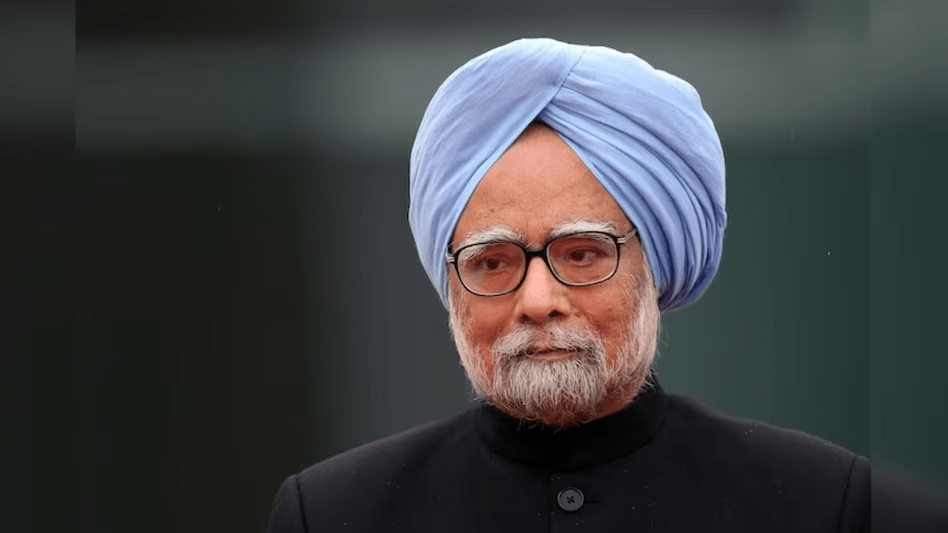
Several important facts about Manmohan Singh – There are several important facts about former prime minister Manmohan Singh are given below –
- Indian Leader, Manmohan Singh was a bureaucrat and economist who worked or served as a prime minister between 2004 and 2014 for almost 10 years and also serving two terms in the UPA Government.
- Presently, Manmohan Singh was the 4th longest-serving prime minister of India for continuously 10 years in two terms after Narendra Modi, Indira Gandhi, and Jawahar Lal Nehru.
- Earlier, Manmohan Singh also worked for the United Nations from 1966 to 1969 after receiving a doctorate in economics from the University of Oxford in England.
- He also worked in many other important posts in the Central Government including Chief Economic Advisor from 1972 to 1976, Governor of the Reserve Bank of India from 1982 to 1985, and head of the Planning Commission from 1985 to 1987.
- When India faced a severe or serious economic problem in the year 1991 then at that time Prime Minister, P.V. Narasimha Rao appointed Manmohan Singh as a finance minister to resolve the economic crisis in our country.
- Manmohan Singh successfully resolved the economic crisis in India in the year 1991 by liberalizing the economy of India under the Prime Minister, P.V. Narasimha Rao.
- Manmohan Singh also worked or served as the leader of the opposition in the Rajya Sabha at the time of the Atal Bihari Vajpayee Government between 1998 and 2004.
- Manmohan Singh was first elected as the prime minister of India after the general elections of 2004.
- Manmohan Singh introduced the National Employment Guarantee Act (MGNREGA in the year 2005 and also worked on reforming the public sector companies, financial, and banking sectors.
- He also launched VAT (Value Added Tax) which replaced sales tax and the Right to Information Act in the year 2005.
- India became the second fastest-growing major economy in the world by achieving the highest growth rate or GDP (Gross Domestic Product) of 9 percent in the year 2007 under the leadership of Prime Minister Manmohan Singh.
- Due to the success of the MGNREGA (National Employment Guarantee Act in our country, Manmohan Singh was again re-elected as the Prime Minister of India in the year 2009.
- During their second tenure, he also strengthens the Unlawful Activities Prevention Act (UAPA) with several amendments.
- In the second tenure, Manmohan Singh also launched the Right to Education Act (RTE) in the year 2009 describes the importance of compulsory and free education for children from the age of 6 to 14 years in our country.
- After the Mumbai Terror attacks in the year 2008, the Manmohan Singh government created the National Investigation Agency (NIA) to tackle terrorism in our country.
- Manmohan Singh Government also created the agency, Unique Identification Authority of India (Aadhar) in February 2009 which can be used as a Multipurpose National Identity Card to enhance national security, and ease or facilitate e-governance,
- He served the position as the Prime Minister of India between 20004 and 2014 for continuously 10 years.
- In the family and personal life, Manmohan Singh married Gursharan Kaur in the year 1958 and had three daughters Daman Singh, Amrit Singh, and Upinder Singh.
 daneelyunus